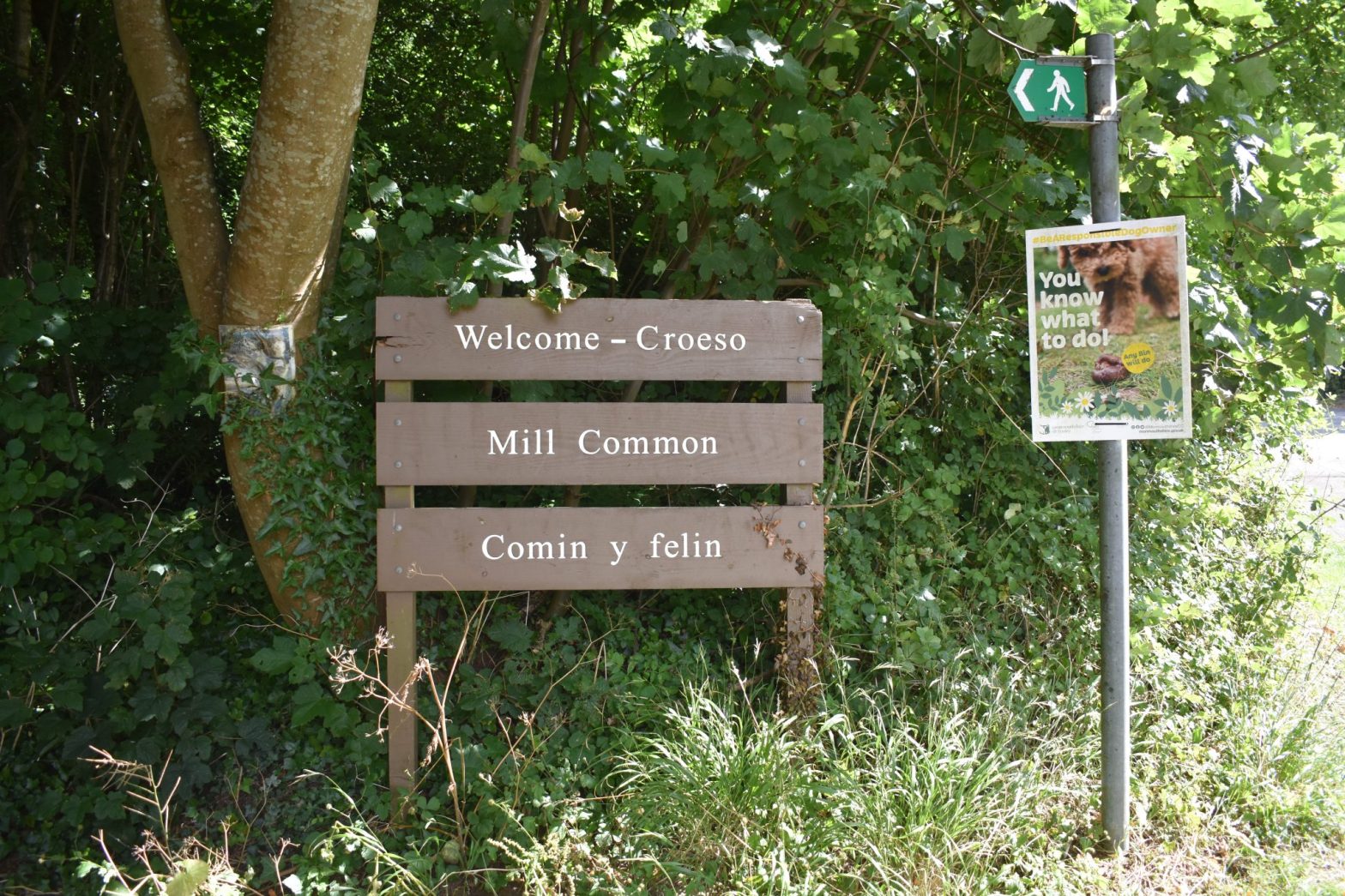
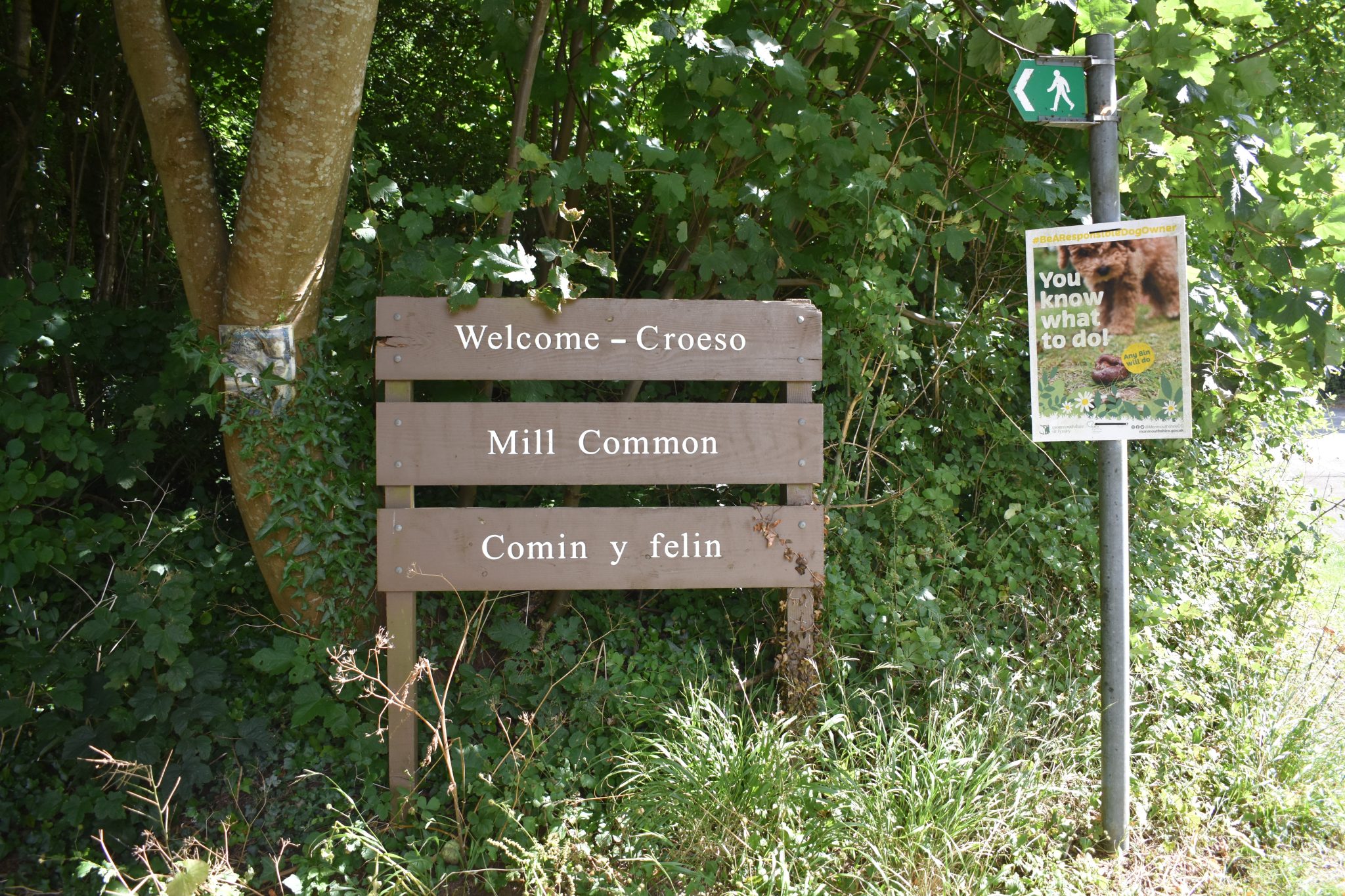
A cherished woodland in the heart of Magor and Undy is set to undergo a restoration project to enhance its ecological health, accessibility, and community value.
Mill Common serves as a crucial green corridor for the local community. However, it faces significant challenges, including extensive ash dieback, overcrowded veteran trees, and degraded paths and steps.
This initiative, supported by The Woodland Investment Grant (TWIG) administered by the National Heritage Lottery Fund on behalf of the Welsh Government, will serve as a flagship site for the National Forest for Wales and promises to rejuvenate this vital green space for future generations.
Monmouthshire County Council will undertake woodland management to remove diseased Ash trees and thin, dense tree stands, which are overcrowding the canopy and preventing sunlight from reaching the understory.
The project will aim to restore the historic viewpoint looking out over the Gwent Levels and improve pathways. Several veteran trees, which have stood on the site for more than 100 years, will be protected by sensitive management. We will help protect the areas around veteran trees and regenerate vegetation by dead hedging around them to protect them from the negative effects of high footfall and compaction.
On the 3rd of October, residents will be able to speak to Monmouthshire County Council’s Green Infrastructure team about the project at Undy Memorial Hall. This will be a chance to learn more about the plans and ask the team questions about the work that will be taking place.
Two sessions are running on the day, and residents can drop in without registering.
Session 1: 1:30 PM – 3:00 PM (Optional site walk at 2:30 PM)
Session 2: 6:00 PM – 7:30 PM (Optional site walk at 6:00 PM)
Monmouthshire County Council’s Cabinet Member for Climate Change and the Environment, Cllr Catrin Maby, said: “As a council, we have a duty of care to protect our environment. This is a vital project to restore and protect Mill Common. If you are interested in the work and want to find out more, please speak to our staff at the drop in sessions on the 3rd of October.”
Monmouthshire County Council has appointed Purcell and their team of consultants to support the successful Heritage Fund grant application for the development phase of the Shire Hall and to integrate the museum and its collections, including the internationally significant Admiral Lord Nelson collection.
These exciting developments will create an enhanced cultural destination and foster a sense of community. The new galleries, shared learning, and community space will engage and inspire residents and visitors, creating a sustainable museum offering. This will increase footfall, drive economic activity, and provide a welcoming space for all in the historic core of the town centre.
Following the completion of work over the summer, plans will be formally submitted for building consent later in September.
We’re now inviting the public to view the designs and share their feedback during the week commencing Monday 23rd of September at the Shire Hall.
The proposals will complement other improvements in Monmouth. Creating a venue with a shared community/learning space will enable the local authority to ensure future services’ sustainability.
The current brief being developed is to reconfigure the existing external and internal spaces to reinterpret and display the museum collections to tell the town’s stories, including the role Shire Hall played in this history through notable events such as the Chartist uprising and the history of local and national democracy.
The museum move also provides an opportunity to explore the life and passions of Lady Llangattock, whose own gift forms the basis of an internationally significant yet relatively unknown and unpublished collection relating to Admiral Lord Nelson.
The museum’s object collection relates to the social history of the town and surrounding area, and using loaned items, it has developed more contemporary modern themes such as the Rockfield recording studio and local artists.
Monmouthshire County Council’s Cabinet Member for Equalities and Engagement, Cllr Angela Sandles, said: “It’s very exciting to see the plans for the Shire Hall Museum coming into fruition. Creating a new modern space to showcase our history will attract more visitors and allow residents to learn more about the amazing local history here in Monmouth.”
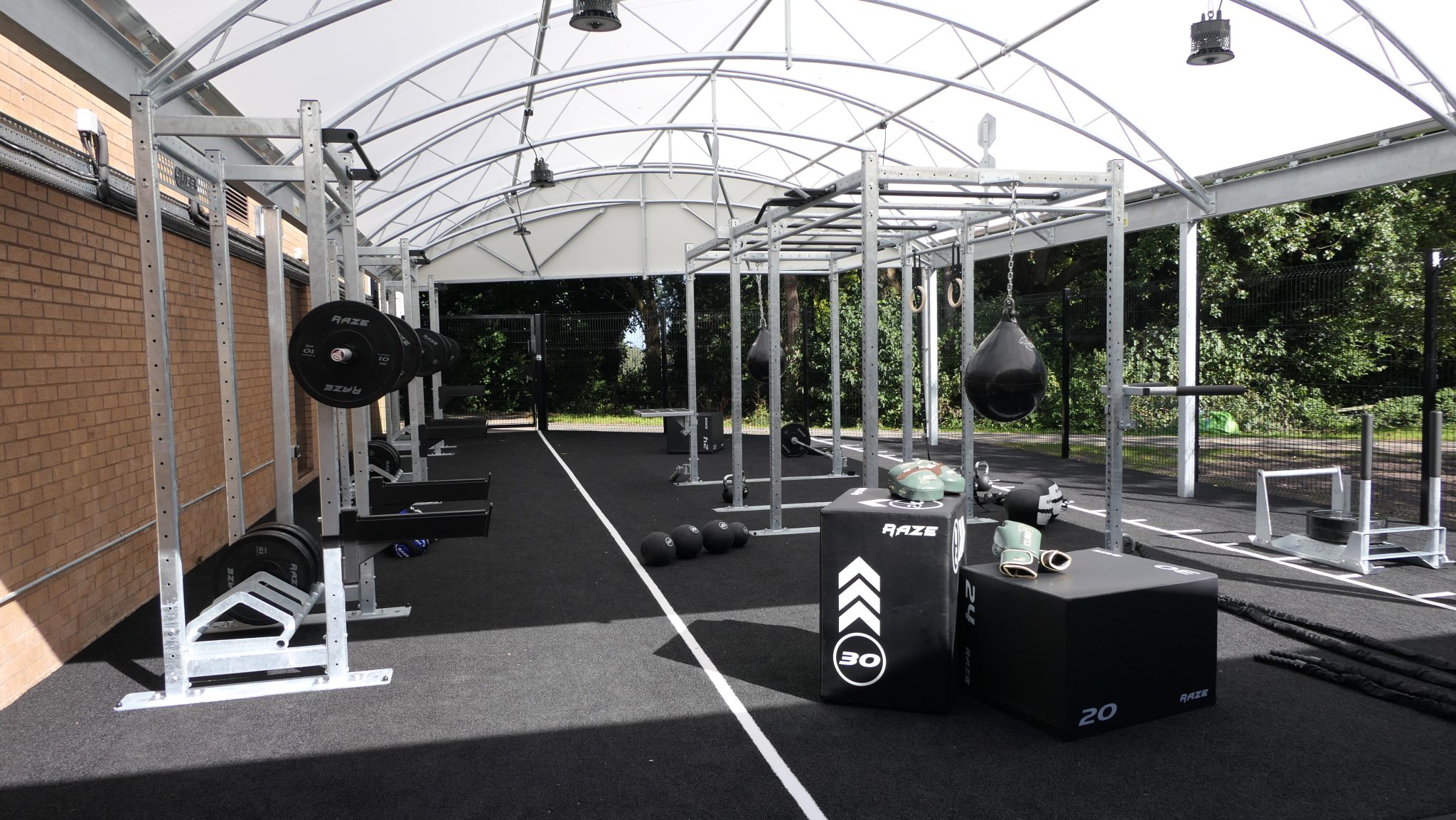
MonLife Leisure Centre members will have access to a brand-new bespoke outdoor space for exercise and physical activity.
The opening coincides with Monmouthshire County Council’s celebration of National Fitness Day (18th September 2024). An annual campaign by ukactive highlighting the role physical activity plays across the UK, helping to raise awareness of its importance in assisting us to lead healthier lifestyles.
The new outdoor gym will include state-of-the-art equipment from Indigo Fitness, such as a functional fitness frame, a 12-meter-long turf sled track, functional wall-fixed rigs, and free weights.
To celebrate the launch of the new gym, a tournament series will be taking place to promote outdoor physical activity and strength training. The tournament can be entered by individuals or as part of a group. Our fully qualified staff will be on hand to support you and sign you up for the latest challenge as part of our tournament throughout the year.
The bespoke outdoor gym will be perfect for members to exercise independently or as a group. Exercising in a group setting has been shown to have numerous benefits, including enhanced training experiences, peer support, accountability, and a sense of community.
The UK Chief Medical Officer Guidelines recommend adults do at least 150 minutes of moderate intensity activity, 75 minutes of vigorous activity or a mixture of both each week. In addition, undertaking strengthening activities on two of those days.
This initiative is funded by the UK government through the UK Shared Prosperity Fund.
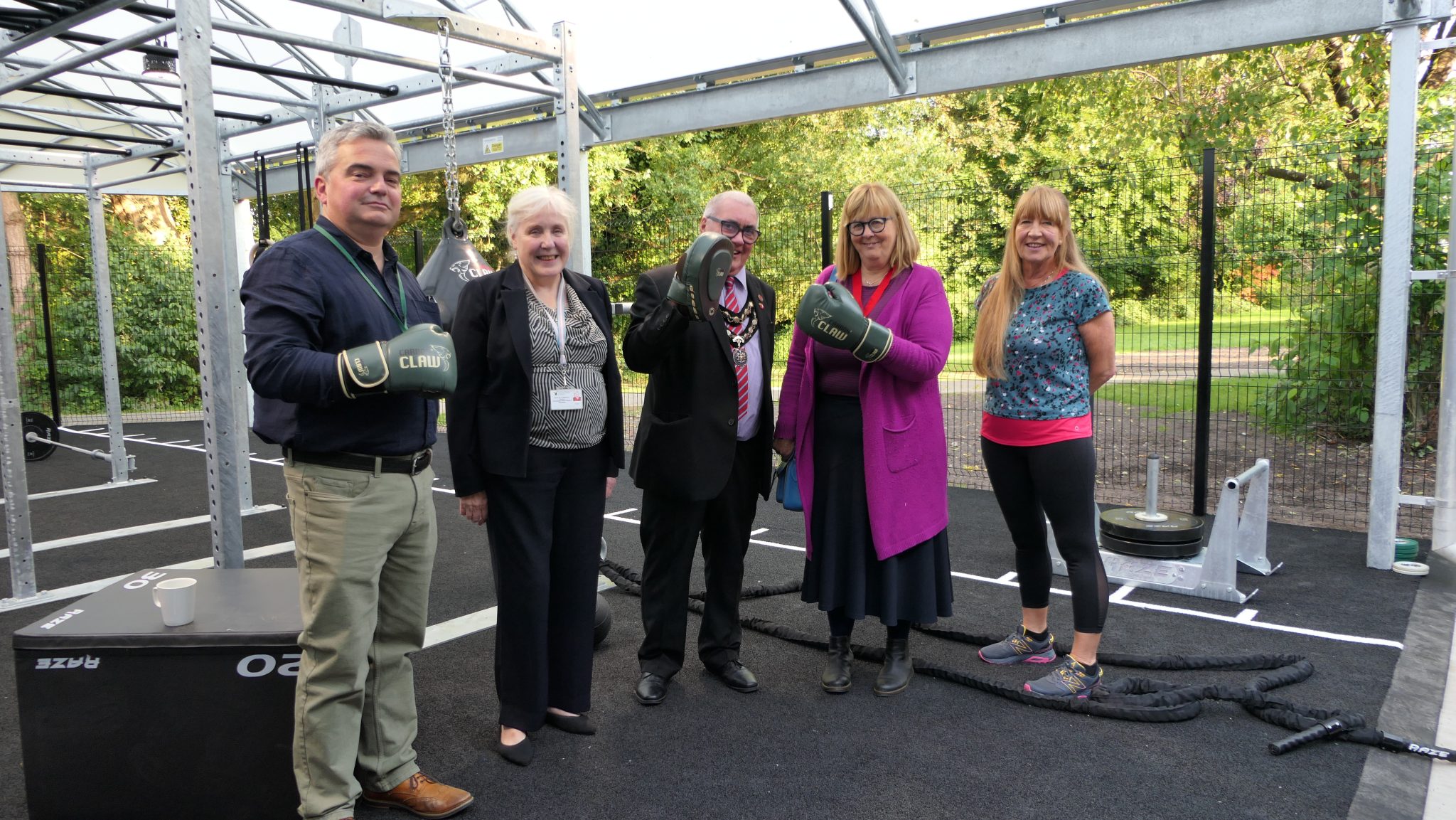
Monmouthshire County Council’s Cabinet Member for Equalities and Engagement, Cllr Angela Sandles, said: “The new exercise area at Chepstow is a fantastic addition to the leisure centre offering. We continue to look at what we can offer our members and the local community, and these new innovative facilities provide an additional way to take part in physical activity. I know these facilities will be a popular area with the members and look forward to see them being used extensively!”
Cabinet Member for Equalities and Engagement, Cllr Angela Sandles (right), with Council Leader Cllr Mary Ann Brocklesby, Cllr Jackie Strong, Cllr Peter Strong and Cllr Christopher Edwards
In addition to the new outdoor gym, Chepstow Leisure Centre features a 20m swimming pool, sauna/steam room (Closed Wednesday and Thursday 1pm-3pm), fitness gym, additional sauna on the lower ground floor (open 10am – 6pm only) a multi-purpose sports hall, an outdoor multi-use games area, 3G pitch and a full-size Astroturf with various outdoor pitches and cricket nets.
Monmouthshire County Council has launched a consultation on the Local Nature Recovery Action Plan (NRAP) and Green Infrastructure Strategy.
Between the 14th of September and the 24th of October, we aim to understand how the climate and nature emergency impacts Monmouthshire residents and gather valuable insight on how we can support our communities.
Monmouthshire County Council is unwavering in its commitment to enhancing and preserving our natural environment under the Environment Wales Act 2016. Our Climate and Nature Emergency Strategy is built on four interconnected pillars: Council Emissions, Nature Recovery, Rivers and Ocean, and Communities and Climate. Central to our efforts is the Nature Recovery pillar, which will be advanced through the Monmouthshire Local Nature Recovery Action Plan (NRAP) and the Green Infrastructure Strategy.
The Monmouthshire Local NRAP is a collaboration between MCC and the Monmouthshire Local Nature Partnership. It provides a roadmap for local conservation efforts, offering practical steps to reverse biodiversity decline and strengthen ecosystem resilience across Monmouthshire. The plan aims to support everyone, from individuals and communities to businesses and conservationists.
The Green Infrastructure Strategy encompasses all natural components of our landscape, including trees, plants, green spaces, grasslands, and water features such as ponds and rivers. These elements are vital for environmental health, societal well-being, and economic stability. Our strategy aims to create a connected network of green spaces to improve health, support biodiversity, enhance ecosystem resilience, increase climate resilience, preserve our landscapes, and promote sustainable economic growth. A key focus is on protecting and restoring natural habitats to support wildlife and increase ecosystem resilience through innovative projects and partnerships, ultimately improving health outcomes and promoting climate action on a larger scale.
Our consultation, which launches today at the Usk Show, is a crucial opportunity for you to share your feedback on the NRAP and Green Infrastructure Strategy. Your opinions on how the nature emergency affects Monmouthshire and your ideas on the support needed to motivate communities to take action are invaluable.
This week, Monmouthshire County Council’s Community Learning team proudly participated in Adult Learners Week. This annual campaign, organised in partnership with the Welsh Government, encourages lifelong learning and highlights the diverse opportunities available through Community Learning.
The team has offered taster sessions throughout the last two weeks to allow learners to upskill, improve confidence and wellbeing, discover new hobbies or simply continue their current learning journey.
Tutors have offered a wide range of tutorials from Art, ESOL (English for speakers of other languages), German, Ukulele, Sewing, Crochet, Lino printing, Skills club, Gardening and Creative Writing.
Adult Learners Week has also provided an opportunity to showcase the success that Monmouthshire’s Adult Community Learning has achieved this year. Over the last academic year, the team enrolled more than 750 learners in more than 90 courses, workshops and free taster sessions.
In May, Monmouthshire County Council’s Community Learning programme, which is part of the Greater Gwent Adult Learning Partnership, led by Coleg Gwent, received a glowing commendation after a recent Estyn inspection.
In July, we celebrated the learner awards as part of the annual Coleg Gwent Adult and Community Learning Evening, which celebrated the outstanding achievements of learners and staff across the Gwent Region. We were thrilled to see several of our learners and tutors recognised for their dedication and contributions.
This year, the team partnered with MonLife Active to offer individuals with a Passport to Leisure membership up to 50% off some community learning leisure courses.
So not to be identified, the names of the child and parent have been substituted.
Name: Ethan
Age: 8 years old
Location: Outskirts of Caldicot Monmouthshire
Family Situation: Lives with his single mother, Sarah
Economic Situation: Limited financial resources
What is the ‘Cycle for All’ Scheme?
The “Cycle for All” scheme is a community initiative aimed at providing bicycles to children, adults and their families.
Introduction
Ethan is a vibrant and active 8-year-old boy who loves cycling. Living in the Caldicot area, cycling is a key part of his social and physical activities, offering him both a means of transportation and a way to play with friends. However, as Ethan has grown, his bicycle has become too small for him. His mother, Sarah, works a part-time job and struggles to make ends meet with the current economic climate and the cost of living, making it difficult to afford a new bicycle. This is where the “Cycle for All” scheme comes into play.
Ethan’s Experience with the Scheme
Discovery and Enrolments
Sarah learned about the “Cycle for All” scheme through a flyer when visiting the castle for one of the organised bug trail events in the school half term.
After applying, Ethan was quickly enrolled, thanks to the simple booking process that only required proof of ID and a brief statement on how a to use the bike and where to ride.
Hiring the Bicycle:
Once the booking process was completed, Ethan was invited to the pick up area within the Castle, where he was matched with a bicycle that suited his size and preferences.
The excitement on Ethan’s face was evident as he selected “a Big boys bike” bright blue bike, complete with a helmet and a lock.
Learning and Empowerment:
As part of the hiring scheme, Ethan was given an overview on how to use gears on “the big bike” he learned how to perform basic and repairs, such as pumping up a flat tire and adjusting the brakes seat and gears.
This not only empowered Ethan by teaching him self-sufficiency and that he was now in control of a bike with gears without the need to stop and ask Mum to push his bike up a hill.
Impact on Daily Life
Physical Health: Cycling has become a weekly activity for Ethan, contributing positively to his physical health and development.
Social Integration: With This new bike, Ethan can easily join his friends on weekend rides around the castle grounds on exploring adventures to the far edges of the park strengthening his social bonds.
Emotional Well-being: The newfound independence and ability to participate fully in activities with peers have boosted Ethan’s confidence and overall happiness.
Economic Relief: For Sarah, the scheme alleviated the financial burden of purchasing a new bike while Ethan is growing so fast, allowing her to allocate resources to other essential needs.
Conclusion and Impact
The “Cycle for All” scheme has had a broader impact beyond individual recipients like Ethan. By promoting cycling, the scheme encourages environmentally friendly transportation and fosters a sense of community.
In the future workshops such as bike maintenance workshop with his mother where she would learn how to perform basic repairs, such as fixing a flat tire and adjusting the brakes. This not only empowers children by teaching them to be self-sufficient but also ease parents’ concerns about ongoing maintenance costs. Having also engaged parents and volunteers, this would help creating a network of support and shared experiences.
Ethan’s story is a testament to the significant impact community initiatives like the “Cycle for All” scheme can have on individuals and families. By providing Ethan with a bicycle, the scheme has not only enhanced his weekend life but also contributed to his physical, social, and emotional development. For Sarah, the program has been a vital support, providing a sense of relief and community connection. Through such programs, communities can effectively address the needs of their members, fostering inclusivity and empowerment for all.
On Saturday, 10 August, families joined MonLife’s Outdoor Accessible Adventure Day at Gilwern Outdoor Centre.
The day was filled with activities enjoyed by families and officers, with smiles evident on all the faces of those who attended. One highlight of the day was a conversation between a son and his dad. The son was overheard encouraging his dad to “Hold on tight, Daddy!” as they enjoyed the abseiling.
The activities, which were modified so that everyone could take part, included abseiling, archery, water play, crate stacking, and many more.
Cllr Angela Sandles, Monmouthshire County Council’s Cabinet Member for Equalities and Engagement, said: “What a fantastic day at Gilwern Outdoor Centre. The day allowed us to provide an opportunity for families to come along and take part in the free activities available at the centre. Seeing everyone participating with a smile will stay with me for a long time in my memory.”
These projects are part-funded by the UK Government through the UK Shared Prosperity Fund.
Gilwern Outdoor Centre is located in Gilwern, Abergavenny, and is situated near some of the best outdoor environments you could wish to find anywhere in the UK, including the River Usk, Black Mountains, and the Brecon Beacons on the doorstep. On-site, there is comfortable accommodation with plenty of space in the communal areas for children to get together and celebrate their achievements after a busy day of adventurous activities.
Families from across Monmouthshire enjoyed a day of fun and games with MonLife at Caldicot Leisure Centre last week as part of the National Playday.
The event, which took place on Wednesday, August 7, attracted around 400 adults and children.
National Playday celebrates children’s right to play while emphasising the vital role of play in their lives.
The event was open to all and boasted an action-packed schedule, including a climbing wall, arts and crafts, den building, crazy golf and much more.
Leader of Monmouthshire County Council, Cllr Mary Ann Brocklesby, said: “It was wonderful to see so many families enjoying the National Playday at Caldicot Leisure Centre this week.
“Play forms such an important part of children’s development. Events like this are a perfect way of letting children freely explore a range of activities and have fun.”
The National Playday event in Monmouthshire was hosted by MonLife Play, with activities being put on by various areas of MonLife as well as being joined by colleagues from Monmouthshire Housing Association, Clybiau Plant Cymru kids’ club and Monmouthshire County councils Community Partnerships and wellbeing team.
As part of developing the wider Active Travel network for Caldicot and the Severnside area, Monmouthshire County Council (MCC) is proposing alteration of the design and traffic management for Woodstock Way in central Caldicot to improve active travel links to and from Caldicot School, Caldicot Leisure Centre and other local destinations. Subject to funding, later phases will improve further active travel links across the Severnside area of south Monmouthshire.
Woodstock Way scheme Construction
Phase 1 of this programme is to provide safer crossing points and efficiently manage traffic on Woodstock Way. Monmouthshire County Council have appointed contractors Centregreat to install the Woodstock Way active travel scheme phase 1. Construction work on the Caldicot Active Travel Scheme will commence on the 17th of March 2025. This scheme is funded through the Welsh Government’s Active Travel Fund.
The area covered by the scheme as consulted on has now been reduced to cover only the section of Woodstock Way from Mill Lane junction to the crossing at Aldi. This change is due to unforeseen circumstances that have affected the scheme and programme of works. It has been necessary to narrow the scope of the current construction works programme to ensure that remodelling of the junction and construction of safer crossings is achieved.
We are concurrently working on connecting schemes across Severnside, and plan to follow this scheme with active travel improvements to Mill Lane, which leads from Woodstock Way to Caldicot School entrance, the leisure centre and Park & Stride car park, Durand Primary School and homes in south-east Caldicot.
These proposals are developed in response to local issues and needs that have been identified by the County Council and other local organisations. There is a need for safer routes and crossing points for walking and cycling, with better management of traffic speeds, congestion and hazardous parking, particularly during drop off and pick up times, with the aim to improve the safety and quality of the environment for local people and for those travelling around Woodstock Way.
We aim to make it easier to make short, local trips by sustainable and active modes. Walking, wheeling and cycling to destinations (also known as Active Travel) can have a positive impact on physical and mental health, ability to learn and concentrate, and open up affordable access to local shops and services, employment, education and cultural destinations, and public transport connections. See more here Caldicot – Monlife
Consultation
Historic consultation of local stakeholders highlighted risks and barriers to active travel in the Caldicot School and Woodstock Way area, resulting in the design of the Woodstock Way active travel scheme. A consultation on the detailed design of phase 1 was held 27th August – 25th September 2024. Some details of the design were adapted in response to consultation responses.
Woodstock Way Active Travel Consultation, August-September 2024
A total of 72 people examined the proposals and responded to our consultation, either at the in-person event on the 25th of September 2024, or through the online survey, which was online between the 27th of August and the 25th of September 2024.
In addition to the online survey accessible to the general public, a slightly amended version of the survey was distributed to students of Caldicot School, and 183 school survey responses were received.
From the school survey: All of the proposed options received an overwhelmingly positive response, with more students thinking that the proposed changes would have a positive rather than a negative effect. Especially the redesign of Woodstock Way and the proposed crossing points at the Mill Lane junction received a majority of responses to say that these changes would have a positive effect.
From the public survey: Overall, 63% of respondents ‘agreed’ or ‘strongly agreed’ that the footway surfacing around Woodstock Way was substandard. 53% of respondents ‘agreed’ or ‘strongly agreed’ that crossings in the area were substandard. Just over 30% of respondents said that they felt unsafe walking through the area currently due to the substandard infrastructure or the speed and volume of motorised vehicles and 32% of respondents said that the improvements would make them feel safer and more comfortable using Woodstock Way.
Almost 14% of respondents said that the improvements would make them change their current transport mode.
The positive comments about the scheme included that providing a crossing at the Woodstock Way and Mill Lane junction would be an improvement, especially for school children trying to cross at this location. Several respondents referred to problems associated with the current situation at school drop-off and pick-up times.
Some respondents thought that the redesign of Woodstock Way would have negative rather than positive consequences. There was concern from some about the need for the scheme and its funding, the potential for conflict between path users, the impact on resident parking, and the possibility of traffic congestion or loss of road width. We will address these concerns through the detailed design, applying best practice and analysis of the impact to the local setting. Please see the feedback section below for further details.
Feedback themes
In total, 57 qualitative comments were received during the wider public consultation, and 30 further qualitative comments were received from school students. The table below summarises the qualitative comments under thematic headings and provides a response to identified concerns.
Feedback theme from public consultation survey
Quantum of Feedback
Our response
The scheme is not needed
12
The scheme seeks to improve active travel routes serving Caldicot School and the Caldicot Leisure Centre to provide a cohesive network of routes that will integrate and compliment other active travel and regeneration schemes in Caldicot. This scheme is needed to improve the safety of Woodstock Way and sustainably meet the travel needs of people in the area. It is designed to address multiple issues, in a way that is cost-efficient, more holistic and less disruptive than tackling them individually. Monmouthshire County Council (MCC)’s business case for this scheme has secured funding and has shown that it meets the aims of the Welsh Government’s Active Travel Fund.
The scheme will not encourage active travel
2
The scheme addresses issues along Woodstock Way which have been identified through the business case, such as safety concerns over crossing points, insufficient footway widths, and poor surface quality. These issues are likely to deter potential walkers, wheelers, or cyclists who would use active travel if these issues were resolved. (47% of respondent said the scheme would encourage them to walk wheel or cycle).
The money should be spent on other things
6
The money for the development and construction of this scheme has been obtained from the Welsh Government’s Active Travel Fund. This is Welsh Government money which is ring-fenced to fund the development and implementation of active travel schemes. This fund cannot be used for any other purposes.
I am concerned about disruption caused by construction
2
MCC will award construction of the scheme to a contractor based on quality and price elements. The quality elements will contain detailed information on the construction methodology and phasing. The scoring awarded for the construction methodology will take into consideration the phasing employed by the contractor and the mitigation measures described by them. Impacts on local residents and access to private properties will be minimised as much as possible.
The scheme will increase congestion and make it more difficult to drive through Caldicot
7
The traffic impacts of signalising the junction were tested using a traffic signals model and existing pedestrian, cycle and vehicular movements through the junction at peak times. The results of the model show that the signalised junction is well within capacity with predicted maximum queue lengths of 4 vehicles and maximum delays of less than 1 minute per vehicle. The traffic impacts of signalising the junction are also likely to be reduced over time as a result of the active travel improvements encouraging people to switch from vehicles to walking, cycling and wheeling for short every day journeys. On-site observations and surveys show that the crossing movements are spread out across all arms of the junction as well as diagonally across Woodstock Way, confirming the need for an all-red traffic phase to cater for all pedestrians and cycle crossing movements. The traffic signals will also prevent vehicles from stopping in the mouth of the junction to let out school students. This currently happens causing further congestion and confusion and increasing the potential for accidents.
I am concerned about the impact on resident parking
3
Resident parking on Woodstock Way and Mill Lane will still be available along most of both streets. The only changes are occurring in close proximity to the Mill Lane junction, where double yellow lines will be extended along Woodstock Way to facilitate the operation of the signalised junction, improving visibility for drivers exiting from Mill Lane. Access to residential driveways on Woodstock Way and Mill Lane will be maintained.
I am concerned about shared use paths
3
The proposed improvements widen the footpaths to a minimum of three metres to provide shared pedestrian and cycle routes. There is insufficient width to accommodate segregated pedestrian and cycle facilities without impacting on the available road space for two-way vehicle flow and residents parking. Shared use paths have been used very successfully elsewhere in the county. The proposed shared use path is designed to be three metres wide, in accordance with Active Travel guidance. Illegal use of active travel paths by motorbike and e-scooter riders is a police matter and should be duly reported by calling 111.
The proposals will increase safety at the junction
5
Comments noted – thank you.
Additional crossings on Woodstock Way are needed and welcomed
16
Comments noted – thank you.
Consider building another path for school children to emerge onto Woodstock Way
3
This is part of a future phase of improvements as part of the wider Caldicot Education and Leisure Links project.
Why haven’t you considered removing the bus layby on Mill Lane?
1
Re-designing or removing the bus layby on Mill Lane were both considered as part of the long-listed options during WelTAG Stage 1 and the short-listed options during WelTAG Stage 2. However, concept design of these options showed that removing the bus layby would make it necessary to accommodate school buses elsewhere and all identified options were determined to offer reduced benefits in terms of number of spaces, proximity and accessibility to the school and increased construction costs.
The money should go towards funding a path to Magor/Rogiet/Undy
4
MCC is developing an active travel network for the growing population across the Severnside area, with a range of schemes and minor works being brought forward as funding and processes allow. This is called the Severnside Active Travel Scheme. The Caldicot Education and Leisure Links scheme Phase 1 scheme forms a key link in the Severnside Active Travel Scheme. More information can be found here: https://www.monlife.co.uk/outdoor/active-travel/caldicot/
This is different to previous proposals that went to consultation
1
The proposals for Woodstock Way have not changed significantly since the development of this option. Similar options for the Woodstock Way and Mill Lane junction and the widening of footways along Woodstock Way were presented during the public consultation in October 2022. The previous consultation did however ask for residents’ views on options that were being considered for the wider Caldicot Education and Leisure Links project.
Total unique comments
87
Phase 1 proposal overview
Caldicot Active Travel Education Scheme phase 1 will upgrade active travel paths and crossings along Woodstock Way to address issues of safety, path quality and congestion. The route improvements in this phase will connect to the wider Severnside Active Travel scheme in later phases. This section has been progressed with urgency because it is a major route to important local services, including Caldicot School, Gray Hill Surgery, Library and Leisure Centre. The area covered by the scheme as consulted on has now been reduced to cover only the section of Woodstock Way from Mill Lane junction to the crossing at Aldi.
Widening and resurfacing of the south side Woodstock Way footway from the Mill Lane junction to the crossing outside Aldi to make a 3-metre-wide shared use active travel path.
Installation of traffic lights with smart Toucan crossing facilities at the Mill Lane junction on Woodstock Way (by Gray Hill Surgery/ Caldicot School) to improve safety of traffic flows (vehicle and active travel). This includes three lateral crossings and a diagonal crossing from Norman Court to the Gray Hill/Caldicot School corner, to efficiently route the main flow of active travel traffic at peak times.
Narrowing and resurfacing of the south side footway of Woodstock Way from Durand Road to Mill Lane to – at minimum – a width of 1.5 metres. This will allow for widening of the opposite pavement.
Conversion of existing Puffin (signalised, pedestrian only) crossing outside Aldi to a Toucan crossing (signalised, walking and cycling).
Repositioning of Gray Hill Surgery bus stops (north and south side) eastwards along Woodstock Way, towards the pedestrian cut-through to the town centre, and away from the Mill Lane junction.
Upgrade of bus shelters to include information boards and green (sedum) roof
Removal of Aldi bus stop (south side) as the Gray Hill bus stop would be moved closer.
Signage to indicate traffic order to restrict Heavy Goods Vehicles from turning off Woodstock Way southwards onto Mill Lane (buses excepted).
Integration of tactile paving, dropped kerbs and signage throughout to improve route visibility, and access for disabled people.
Update of road markings.
Scheme drawings
To increase/decrease the size of the diagram, click the plus/’+’ and minus/’-‘ buttons in the bar at the top of the diagram window. To pan across and up/down, drag the sliders across the bottom and right-hand side of the diagram window. To open the diagram as a full page, click on the link below the diagram window. This will open the diagram in a new window, with the same increase/pan controls as described above. You can also download the image by clicking ‘Download’
Active Travel is a term used to describe walking, wheeling or cycling to a destination (also called “purposeful journeys”). It does not cover walking and cycling done purely for leisure although it could significantly enhance leisure activities by helping to link up networks. Active travel can be used to get to school, work, services and shops, or as one of several modes on a longer journey – for example, walking to the station to catch a bus or train. MCC’s active travel strategy focuses on journeys of three miles or less, which means improving walking and cycling infrastructure within communities, to make active travel the first natural choice for local journeys.
This scheme is funded through the Welsh Government Active Travel Fund, with funding awarded through a competitive bidding process. The funding obtained is scheme specific and cannot be spent on anything else.
Why is this scheme needed?
This scheme is needed to improve the safety of Woodstock Way and sustainably meet the travel needs of people in the area. It is designed to address multiple issues, in a way that is cost-efficient, more holistic and less disruptive than tackling them individually. Monmouthshire County Council (MCC)’s business case for this scheme has secured funding and seeks to maximise beneficial outcomes, through its strategic focus on active travel links to education and services, which in this area include Caldicot School, Leisure Centre, GP surgery, town centre and the Library/Hub.
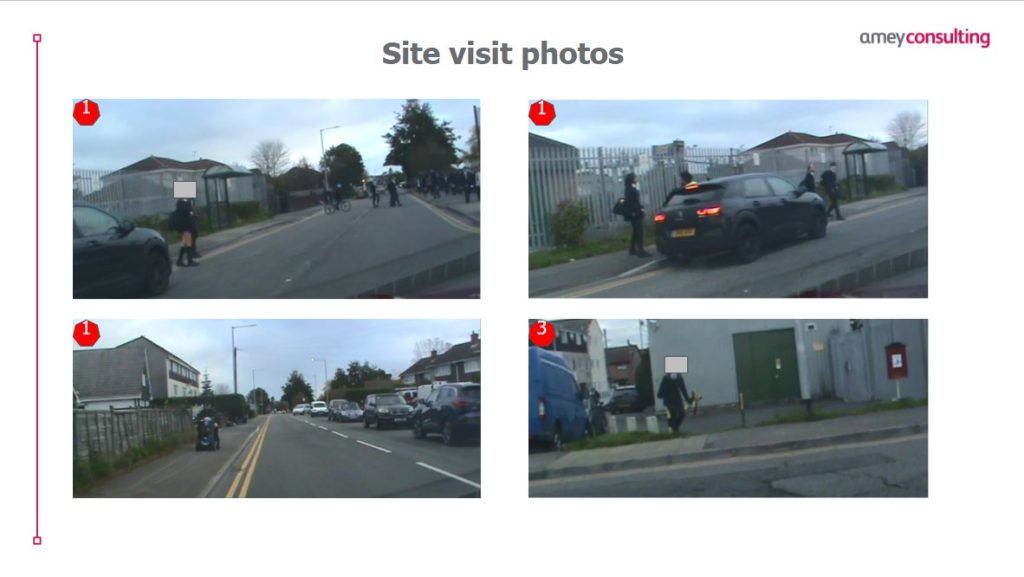
Woodstock Way is a busy road where incidents of road danger involving Caldicot School students have been reported, and high traffic levels were observed during peaks causing congestion and safety concerns. The design of the area has an effect of how people travel, and the safety and attractiveness of that experience.
Our vision for the area is one where people have fair and convenient access to travel and transport options that are best suited to each trip, thereby improving connectivity and reducing the inequalities created by over-reliance on driving. Just over one fifth of adults in Monmouthshire have obesity, and more than one third do not do enough physical activity (source: British Heart Foundation 2023). It is generally recognised that walking and cycling paths need to be improved so that active travel (walking, wheeling and cycling for purposeful journeys) is an attractive and viable option, because that drives ‘modal choice’ (how people choose to travel) has a knock-on economic effect through consequences to our health and wellbeing, the environment and the quality of the local area.
To further understand the local travel and transport issues around Woodstock Way, we engaged with the primary local sources of traffic (of any mode, i.e. drivers and users of public transport and active travel). In 2020-2022 MCC commissioned Amey Consulting to study the area around Caldicot School and Leisure Centre. Conversations have been held with the Gray Hill surgery. Leisure centre users were consulted in 2020. Caldicot School students were consulted in 2021 on issues faced in commuting to school. Hazards and perceived danger were mentioned regularly, related to narrow pavements, heavy goods vehicle traffic, anti-socially parking and congestion during school pick-up and drop-off times. Students reported cramped and uneven pedestrian infrastructure and inaccessible pavements, with a lack of drop kerbs for wheelchair users even forcing them to use the road. Routes for cycling were also reported as inadequate and inconsistent. High traffic volumes make it difficult to cycle on the roads without segregated facilities. Crossing roads was another difficulty faced by Caldicot pupils, whether walking, wheeling or cycling, due to the volume and speed of traffic. The responses highlighted the need for a crossing on Woodstock Way at the corner of Mill Lane, as the nearest formal crossing is too far from the schools and does not serve active travel traffic from south and west Caldicot via Woodstock Way and Norman Court. Other factors that influenced the use active travel to get to school included time pressures, distance, weather conditions and the social aspect of commuting with peers.
From a study of the wider area, there are these specific issues on Woodstock Way:
Major safety concerns associated with students crossing at the junction in all directions. Poor visibility for drivers at Mill Lane junction due to over-parking on Woodstock Way
Insufficient footway width at the bus stop opposite Gray Hill Surgery, resulting in pupils blocking footway and spilling onto the carriageway
Footway width restriction and poor surface quality
Lack of necessary signage on Woodstock Way
Unpredictable crossing/parking was also observed, The consultants then prepared the proposed scheme as a Full Business Case, based on a range of evidence including interviews, observation, traffic surveys (including walking and cycling counts) and studies of the drainage, topography, land ownership, etc., to meet the objectives of the Council and the Active Travel Fund.
Image: Amey 2022 Site visit photos
This scheme has been designed around this consultation, which showed that safety and active travel infrastructure improvements are needed. Beyond safety and traffic management measures, high quality active travel routes are needed to support everyone, including students, to live active, healthy and connected lives.
Why has Woodstock Way been prioritised over other schemes?
A limited number of schemes can be progressed each year. Funding for this scheme was secured for this year, as research and design had reached the necessary stage for consultation and implementation. Woodstock Way was identified as a walking/wheeling and a cycling route in the ATNM (Welsh Government’s Active Travel Network Map) consultation in 2020-2021. It is a Very High Impact route on the Transport for Wales route impact tool, based on its central location and proximity to schools and other services, and this underlines the need to address the safety issues on the route as a matter of urgency.
We are building a network of routes throughout the County. Woodstock Way and its junction with Mill Lane has been prioritised as an active travel scheme because it is a main route to Caldicot School, with risks associated with school start and end times, but it’s also a town centre route to other destinations that attract traffic, be it by foot, wheeling, cycling, mobility scooter, bus or private vehicle. Destinations in the vicinity of this central road include Gray Hill Surgery, the town centre, bus stops, the leisure centre, Library/Hub and TogetherWorks, supermarkets, car parks and other local services, and there’s also through-traffic and recreational travel to consider.
The Woodstock Way scheme has ring-fenced and time-limited funding from the Welsh Government’s Active Travel Fund for financial year 2024-25. MCC successfully secured Welsh Government funding for this scheme by prioritising high-potential, central routes near schools, transport hubs and other services. This route has been prioritised because of the safety issues, and because it meets the criteria to maximise the impact of investment in active travel.
When will the route be constructed?
MCC is aiming to progress this project following public and stakeholder consultation, subsequent finessing of designs and a successful tender process.
How will the scheme be funded?
The scheme is to be funded through the Welsh Government’s Active Travel Fund. This funding stream is ringfenced to improve active travel infrastructure within larger settlements. Active travel infrastructure improvements support other policy areas, such as health and wellbeing, air quality, road safety, the Socio-economic Duty and placemaking/regeneration. The funding is administered by Transport for Wales on a competitive basis, where Monmouthshire County Council has bid for the funding to improve the Caldicot and wider Severnside area, creating safe and equitable access to sustainable transport for everyday journeys in Severnside.
The grant objectives of the Active Travel Fund, by which funding bids are assessed:
Encourage modal shift from car to active travel in isolation or in combination with public transport
Improve active travel access to employment, education, key services and other key traffic generating destinations
Increase levels of active travel
Connect communities
Have grants been secured for the proposals?
Funding has been secured in principle to complete the proposed works this financial year following a period of consultation and any following design amendments. This funding is time-limited and ring-fenced.
What about the rest of the area – does this mean other schemes in Severnside are de-prioritised?
MCC is developing an active travel network for the growing population across the Severnside area, with a range of schemes and minor works being brought forward as funding and processes allow. This is called the Severnside Active Travel Scheme. The survey of Caldicot School students in 2022 also highlighted the need for safe and practical active travel routes linking to Caldicot for the services that are shared across Severnside such as the secondary school, library and leisure centre. MCC is working through Welsh Government’s Active Travel Network Map and Active Travel Fund to futureproof travel and transport options for the residents of Caldicot, Crick, Caerwent, Portskewett, Undy, Rogiet and Magor, and support sustainable travel in and out of the area.
The Severnside active travel map (below) is indicative of the general areas of focus as we develop routes to central destinations in Severnside. The Woodstock Way scheme is shown on the map as 6. Education Scheme Phase 1 (red line). Routes are shown on the map for illustrative purposes and are not definitive of final network design. Other parts of overall Severnside active travel network are at earlier stages of development, and we will update the map as and when route alignments are established. Connections through Caldicot town centre will be the subject of a separate study.
Why Woodstock Way and not Newport Rd?
Newport Road was subject to a trial closure in the Autumn of 2022, scheme consultation following this trial indicated the strong desire for the road to remain open to 2-way through traffic. The space available within the carriageway does not allow for significant improvements to walking and cycling infrastructure along its length. A funding bid was submitted to redesign the road in light of the consultation results and with improvements for pedestrians where possible. Unfortunately this was not supported by the funding body.
During the progress on Newport Road, a separate scheme was underway looking at improvements around Woodstock Way and Mill Lane, including the improvement to pedestrian crossing facilities in the vicinity of the school. This scheme gained traction with the funders and is now what is presented here.
Will traffic be diverted onto Newport Rd?
Woodstock Way will remain open to 2-way traffic and the road widths will remain within standards. No impact is foreseen on motor vehicle traffic with the current 20mph speed limit.
How will this affect parking?
There will be localised road narrowing around the Woodstock Way/ Mill Lane junction at the new signalised crossing. Vehicle tracking analysis has established the feasibility of the planned road widths. To maximise parking within the redesign, and as a safety measure, a new Traffic Regulation Order (TRO) will restrict very large lorries from entering Mill Lane.
The standard restriction on informal parking in the vicinity of junctions, as per the Highway Code, will be maintained to allow safe sightlines around the crossings. Access to residential driveways on Woodstock Way will be maintained.
Woodstock Way is well served for visitor parking, with Woodstock Way MCC free car park and the Asda and Aldi car parks. In addition to supporting better use of capacity in the MCC car park by improving the entrance sightlines on Woodstock Way, the scheme is aimed at encouraging modal shift (converting some short car trips to walking or cycling) thereby reducing pressure on parking for those who need to drive.
What is a ‘shared use active travel path’?
A shared use path is a path for use by any mode of active travel, be it walking, wheeling or cycling, without any physical separating features or markings. The proposed shared use path is designed as three metres wide, in accordance with Active Travel Act guidance. Illegal use of active travel paths by motorbike and e-scooter riders is a police matter and should be duly reported by calling 111.
Image: Shared Use path roundel sign
This scheme includes widening sections of footways of Woodstock Way to accommodate a shared use active travel path that will be open for use for walking, wheeling (wheelchair, mobility scooter, kick scooter, etc.) and cycling. Specifically, the Woodstock Way north-side footway from the B4245 end of Woodstock Way to just beyond the Mill Lane junction, and south-side Woodstock Way footway from the Mill Lane junction to the crossing outside Aldi. Signage and tactiles will be installed to indicate shared-use designation. The routeing is designed around surveys of local active travel flows and traffic modelling.
Shared use paths allow for people walking, wheeling and cycling to use the same path, with enough width for it to be comfortable to walk with a buggy, use a mobility scooter, or accompany a child on a bike. An observation from other active travel schemes is that shared paths are conducive to considerate and slower-paced use: – where cyclists want to travel fast, they opt to use the road instead.
How does this scheme connect to the railway station?
The scheme is one part of a series of projects to connect through all of the Severnside communities. Projects are proposed to link into the railway stations, and we will progress these as resources and prioritisation allow.
How does this scheme connect to Mill Lane?
The Woodstock Way scheme is part of the Severnside Spinal Route. Building on the Woodstock Way scheme, designs are in development to (subject to funding and approval) continue the shared use active travel paths from Woodstock Way down Mill Lane to the entrance to the Leisure Centre car park, increasing capacity for active travel and creating a more direct Park & Stride route to Caldicot Comprehensive School from the Leisure Centre car park. This will address the safety and accessibility of routes to Caldicot School and Durand School, whilst improving the quality of place and green space along Mill Lane.
Won’t new traffic lights and crossings cause traffic jams?
The impacts of signalising the junction were tested using LinSig traffic modelling of observed pedestrian, cycle and vehicular movements through the junction at peak times. The results of the model show that signalised junction is slightly over capacity in the afternoon peak (105%), but this only results in a maximum queue length of less than 3 vehicles in the peak period and should be mitigated over time by modal shift encouraged by better active travel provision. The queue modelling should be compared to the current situation, which is a lack of safe crossings, or the suggested alternative, which is a zebra crossing and several informal crossings that will cause congestion differently (see below). It is possible that there will be a short-term peak in congestion after the scheme is constructed: this is typical of remodelled junctions, as it takes a few weeks for people to get used to changes to a route that they are familiar with.
The advantage of providing signalised crossings across all arms of the junction is that it caters for all pedestrian and cycle crossing movements in the most efficient way possible. On site observations and surveys show that the crossing movements are spread out across all arms of the junction as well as diagonally across Woodstock Way. It will also prevent vehicles from stopping in the mouth of the junction to let out pupils (this currently happens causing further congestion and confusion and increasing the potential for conflicts).
Advances in signal-controlled crossings will assist in the efficient control of traffic flows: Firstly, the new traffic signals will detect the presence of approaching vehicles on both the main line and the side road, as well as pedestrians and cyclists waiting at the kerb side or crossing the junction. The vehicle detectors will prioritise green-light time to the main road demands on Woodstock Way and will only stop main road traffic when there is a demand from traffic approaching from Mill Lane, or when the push button is pressed for the pedestrian/cycle crossing.
Secondly, detectors on the crossing facilities will detect the presence of pedestrians and cyclists and extend the crossing period time to suit. This means that traffic is only held for as long as needed and accommodates those who may need longer to cross (such as elderly/mobility impaired). Lastly, sensors on the kerbside will check the presence of people waiting to cross so, if someone presses the push button but walks away, the crossing phase will be cancelled allowing main line traffic to continue.
Wouldn’t a simple crossing, without the rest of the scheme, be quicker and cheaper?
If, instead of the proposed active travel scheme, a single zebra crossing was to be installed on Woodstock Way, this would only cater for one pedestrian crossing movement but may cause traffic to be stopped more often due to lack of provision for other crossing movements and the school peak period arrival and departure profile. The main pedestrian desire-line crossings (established in the preparatory traffic surveys) focus around the Mill Lane junction: a standalone zebra crossing in this location would either have to be placed too far from the junction to solve the safety issue, or fail safety audit and not be buildable, without the proposed measures surrounding it.
The proposed scheme addresses both current issues and future/growing problems with a secured source of funding. Road traffic danger has been highlighted, but the installation of a crossing on its own would not effectively address the systemic structural and behavioural legacy that underlies the current safety issue. Particularly at school start and end times, there is a clear need for improved route accessibility, traffic flow control (vehicular and active travel), wider paths and safer crossings serving several routes. In addition, there is the potential to address comprehensive issues to make active travel attractive enough to support even more people to leave the car at home for local trips. This scheme includes safe infrastructure for wheeling and cycling, vital to making active travel accessible, safe and practical. This scheme is designed to be cost-effective and ambitious in addressing multiple issues, from urgent questions of road safety to more general problems with public health and sustainability, in a way that is less disruptive than tackling them individually.
Why does the scheme have to be built to Active Travel standards?
This scheme is funded through the Welsh Government’s Active Travel Fund. This funding is ringfenced for active travel and, as such, the scheme must meet the specifications of the Active Travel Act guidance and evidence that it is focused on achieving the Wales Transport Strategy’s outcomes including modal shift, through the Welsh Transport Appraisal guidance (WelTAG) process.
Why do we need active travel routes in Caldicot?
Walking and cycling can be a useful, low-cost, efficient way to get about the town. Where students can walk to school, they are better able to concentrate, maintain good health and build social connections. MCC is working to support them, and everyone else too, to be more active because it benefits everyone’s health and wellbeing, as well as the environment and the community. We have seen an increasing proportion of short, local trips made by car: This creates a vicious cycle of congestion and feeling of risk that puts people off active travel. Some priority routes around schools, such as the junction of Woodstock Way and Mill Lane, urgently need to be re-designed to boost the safety, attractiveness and practicality of active travel for short, local trips.
Why not develop the King George V path?
The King George V path has been put forward as an alternative route connecting Church Road to Caldicot Station. It has not been prioritised for development or funding bids over Woodstock Way because of its location, and because it is narrow and isolated in places, though it remains on the Active Travel Network Map for addressing in the future. Woodstock Way, on the other hand, is adjacent to the Comprehensive School and there have been specific incidents of clashes between road and active travel traffic that have made this road the focus of the safety and quality design improvements. Woodstock Way is a wide route, with potential capacity for high volumes of active travel traffic.
Why are the bus stops being moved, and one bus stop being removed?
The Gray Hill Surgery bus stops (north and south side) will be repositioned eastwards, towards the supermarkets, Hub & Library and pedestrian cut-through to the high street, and away from the Mill Lane junction. This is designed to improve safety and visibility at the junction and better distribute the bus stops on Woodstock Way to bring the Gray Hill stops closer to the town centre. Studies of traffic flows in the area have shown that bus stops are currently too close to the junction which both creates risk and makes an unpleasant experience for those waiting when the junction is crowded. The Aldi bus stop (south side) will be removed as the Gray Hill bus stop would be 60 metres away, and the following bus stops are accessible at Caldicot Cross. The Woodstock Court bus stops will remain in the same place. The route of the public bus will remain the same. The bus shelters will be upgraded to include information boards and green (sedum) roof for access and environmental benefits.
Why doesn’t the scheme extend around the Asda corner?
Funding was provided to address problems around the school. It was assessed that this phase of the design should end at the Aldi crossing, where the main flow of active travel traffic will be heading towards the town centre, rather than continuing along Woodstock Way. Footway provision around Asda is already rollable and of a suitable width, so would not currently attract funding.
What about disabled access?
The accessibility of the route is central to the design and its funding, and particularly important to its proximity to Caldicot School and the Nurcombe Centre for students with additional learning needs (ALN), and the GP surgery. The current problems with local pavements, including a lack of drop kerbs, particularly affects the access, safety and comfort of people with disabilities, as highlighted in our 2022 consultation.
Paths will be designed and constructed according to the Active Travel Act guidance, ensuring that accessibility is considered throughout, both in the material infrastructure, signage and surfacing, and as part of a connected network. This means that design of the crossing facilities at the Mill Lane junction creates a more convenient and direct route, so that people aren’t forced to go a long way out of their desire-line along their route in a way that is particularly arduous for people with mobility restrictions and using wheelchairs.
We want to ensure that Woodstock Way active travel routes are accessible and attractive to everyone, including those with disabilities and reduced mobility, and/or travelling with children and/or baggage. Wider paths and clearer indication of routing are designed to reduce the potential of clashes between different traffic streams and improve the comfort and sociability of active travel. Safer, formalised street crossings with sensor-led smart phasing will further improve the accessible and intuitive function of the active travel paths.
How are people supposed to get to the town centre?
Existing walking/wheeling routes between Woodstock Way and the town centre will not be affected by this scheme. Improvements to connections into the town centre will be a later phase of development of the Severnside active travel network. There is currently rollable access from Woodstock Way to the town centre via the two routes through the Wesley Buildings (Bargain Booze/Davies & Son and Aldi/Dominos) and from the Library/Hub to the Cross, which will not be negatively affected by this scheme.
Will the scheme take trade away from the centre of Caldicot?
Good quality active travel infrastructure supports local shops and high streets by making it easier to get into the town centre for Caldicot and Severnside residents. We are working to increase the attractiveness and convenience of walking, wheeling and cycling to local shops as an alternative to driving out of town or to the supermarket. Access to active travel supports the regeneration of characterful, resilient and sustainable communities, for the health and wellbeing of current residents, a growing local population and for future generations.
This scheme will improve connections to existing walking/wheeling routes between Woodstock Way and the town centre, with later phases of the scheme linking-in Mill Lane and Caldicot station, to enable more local people to shop locally, benefiting from the financial savings and social opportunities that accompany better access to active travel.
Where cyclists want to commute past the town centre, this scheme will improve their safety on Woodstock Way, whether using the road or the active travel path. Caldicot town centre is pedestrianised. Mobility scooters are accommodated, and cycle parking is provided at either end of the pedestrianised area, giving competitive advantage to active travel over car parking in the area which can be enhanced by improving routes that connect to the town centre, such as Woodstock Way.
How has the consultation been promoted?
The consultation has been promoted via local poster distribution, as well as on the Monmouthshire County Council website, local newspapers, and social media. We have delivered information on the proposed double-yellow line extension to the residents that will be directly affected by this change. This approach is to ensure that, outside of the few households directly affected by the double-yellow line extension, we give equal treatment to the views of people who live in and use the area, regarding their need for safe and comfortable use of the space.
Residents and visitors can now have their say on what exhibitions they want to see at the Shire Hall Museum.
MonLife Heritage is in the process of moving Monmouth Museum into the Shire Hall and is looking for which collections residents and visitors would like to see exhibited.
From the 1st of August 2024, an online survey will be available to gather feedback on themes and activities that would attract visitors to the museum. Whether you’ve been before or have never visited, we want to create a museum full of history and activities for everyone.
Shire Hall will be a modern and engaging museum based on community conversations to ensure that it is relevant and representative for all of our visitors. It will bring local stories alive, as well as events and activities that all want to see and participate in.
The redevelopment project has been funded by Monmouthshire County Council and The National Lottery Heritage Fund.
Following the feedback, our project team will work with architects and museum design teams to develop plans to create a new museum in Shire Hall.
Monmouthshire County Council’s Cabinet Member for Equalities and Engagement, Cllr Angela Sandles, said: “We are working to create a modern space for visitors to learn more about the vast local history of Monmouth and surrounding areas. This museum is for everyone, and the survey lets you tell us what you want to see. If you’ve not been to the Shire Hall before, I’d urge you all to do so. The building is steeped in local, Welsh and British history.”
Built in 1724, Shire Hall is Grade 1 listed and was formerly the location of the Assize Courts and Quarter Sessions for Monmouthshire. It is most famous for the 1839/40 trial of Chartist leader John Frost and others for high treason during the Newport Rising. Why not visit today and see the courtrooms and cells that have been vital to Monmouth’s history?
The Shire Hall Museum in Monmouth is open from 11.00 am to 4:00 pm on Mondays, Tuesdays, Thursdays, Fridays and Saturdays (holiday opening hours may vary). Admission is FREE.